Total Pageviews

Showing posts with label kerala hindu history. Show all posts

Sunday, November 18, 2018

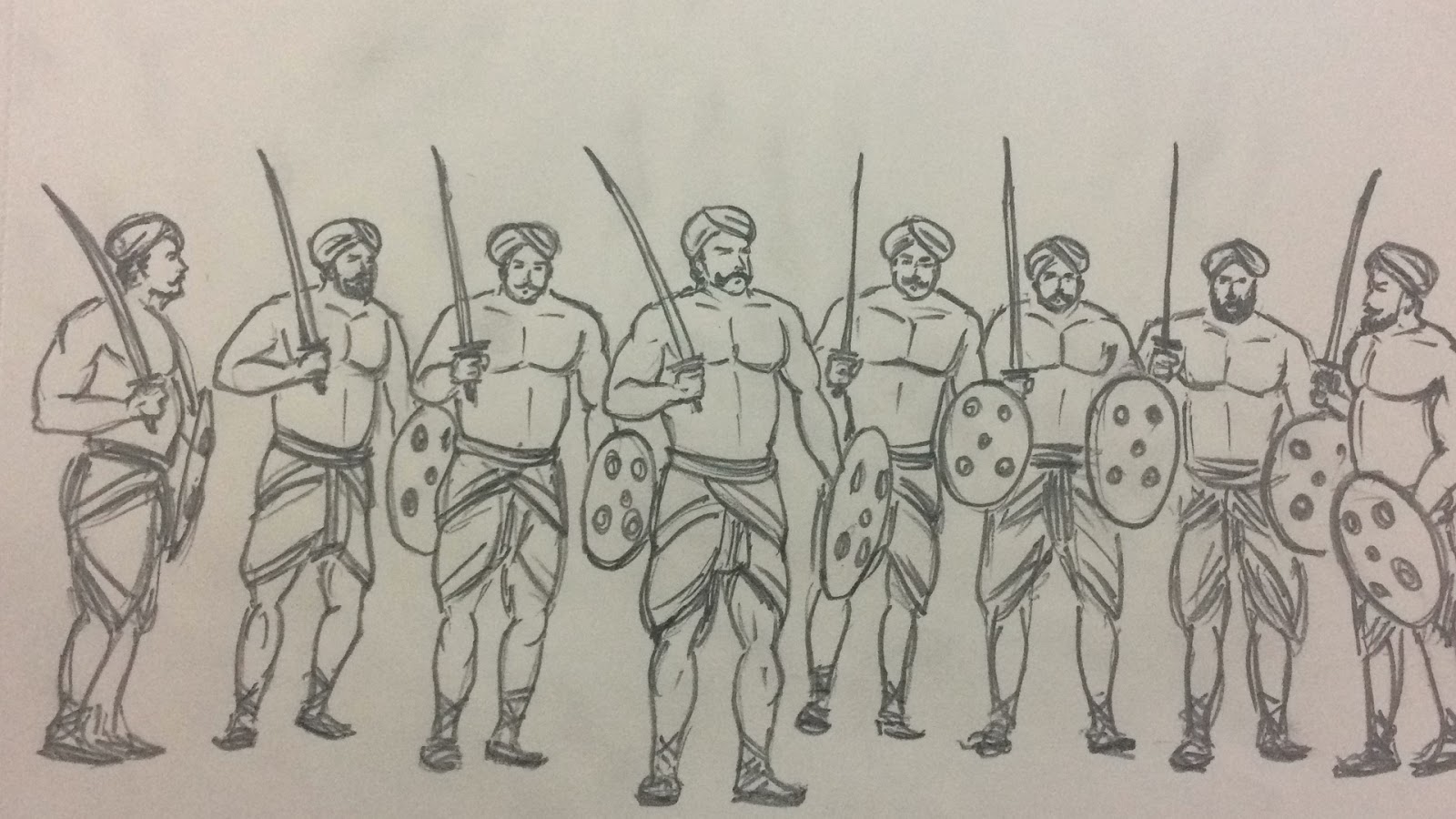
History of Kerala - Ettuveetil Pillamaar / എട്ടു വീട്ടിൽ പിള്ളമാർ (lord of eight houses)

//Googling a lot on the subject is recommended. History is just an insight into the past and is not recommended to be believed, based on one article or WhatsApp forwards. ;) Intention is to just provide basics about the subject and a simple guide to a topic in history //


In the 16th century or even before, the Padmanabhaswamy temple was managed by a board of members called Yogakkar under the control of King. The yogakkar divided the temple land into 8 districts. A Nair nobleman was assigned to each of these eight districts. These Nair noblemen were called as Ettuveetil pillamaar


Ettara Yogam

The Ettara Yogam was a meeting set up conducted, to decide on the temple activities. The members included 8 trustees under the direct control of King. The trustees included:
The yogam/meeting was named Ettara (eight and a half) since the King also had Half vote. So total 8 +0.5.

Even though all the management decisions were taken by the trustees, no decisions were approved without the final sanction from the King.

Yogakkar vs the King

The difference of opinion between the King and the Yogakkars were common and eventually led to conflicts. The combined power of Pillamar and Yogakkar posed a serious threat to the King.

Ettuveetil Pillamar

The ettuveetil pillamaar enjoyed the supreme power and eventually planned to get rid of the royal family itself. They successfully executed assassination of the King and even plotted and executed assassination of others from the Royal family who could become the next King. The crookedness of Pillamar continued until Marthanda Varma came into power. 

End of ettuveetil Pillamaar era

The power of pillamaar was dethroned by Marthanda Varma. As per historical studies, pillamaars were either killed or exiled. There are even conclusions that members of pillamaar family sought asylum in neighboring states and some even converted to Christianity.

Some interesting comments (related to pillamaar family's conversion to Christianity and also on asylum in neighboring states) from a blog related to Kerala history :


Wednesday, June 7, 2017

History of Religion in Kerala Part III - Aryanisation (From the book by A Sreedhara Menon)

The period when Aryan immigration started towards Kerala is not exactly known and is always a topic of debates among historians. The majority of the knowledge on this subject is known through the author, William Logan.


As per the analysis by various historians and facts, the first batch of the Brahmin immigrants from the Northern part of India entered Kerala by 3rd century BC that eventually resulted in spreading of Vedas and decline of Buddhism and Jainism.

The immigration of Brahmins is believed to have started on a small scale during the Sangam age itself. Mayura Sarman and his son Chandrangathan are said to have invited Brahmins during their reign and settled them in Kerala and Tuluva countries. Also, the domination of Kerala by Chalukyas, Pallavas, and Rakhstrakutas is believed to have boosted the aryanisation in Kerala.

In the 8th century, AD aryanisation in Kerala reached its peak and strengthened the existing Brahmin force.The Brahmin scholars who came along conducted debates with Buddhist scholars defeated them and established the Vedic faith.

Vedic schools were established, headed by Prabhakara, Mimasaka who became the Guru with Gurumata philosophy. By 9th century Aryan influence increased much and was joined by Hindu reformers such as Shankaracharya. 

Chaturvarnya

The caste system was slowly inducted into the casteless society through the ideology of Chaturvarnya. The immigrant Brahmin scholars impressed local rulers with their Vedic knowledge and influenced them to do yagas and sacrifices for their prosperity. The traders were introduced to the trade routes and commercial centers of northern India. 

The princely and merchant classes were made believed that they belonged to two superior castes, Kshatriyas (ruling) and Vaisyas (trading). Eventually, people who followed other jobs were treated with inferiority. The working class like Panas, Vetas, and Kauravas who had a high status in the society in the early Sangam age came to be looked as low caste and inferior. Some among them these communities were absorbed into the Brahmin community considering their intellectual knowledge.

Change in Food habits

The use of beef and liquor which was common among Brahmins in the early Sangam age became a taboo. The use of beef brought social stigma to their status. Continuous use of beef by Panas community was one of the factors which brought their status down.

Literacy

The introduction of caste system brought down general literacy. Members of fourth caste Sudras were denied education. The social status of a person was determined based on the occupation they followed. Those who were engaged in physical exertion were relegated to the lowest class of the society.  Female education was neglected. Child marriage took place in place of adult marriage.The immediate impact of Aryan immigration brought decline of labor class and women who enjoyed a superior class.

Against Buddhism and Jainism

Aryan missionaries devoted time to spread propaganda against Buddhism and Jainism. Buddhist viharas were destroyed. Buddhist images obtained from Karumadi and Pallikkal is considered as proof for these.

Establishment of Temples

Brahmin immigrants established many Hindu temples. Non-aryan deities were also inducted to Hindu fold. Dravidian goddess Kottuvai was accepted in the form of goddess DurgaKali and Bhagavati was also added. Popular 'non-aryan' god Sastha were added as Hari Hari Putra (son of Lord Vishnu and Shiva) in order to be accepted by converts from Hinduism. 

To conclude,  Hinduism in Kerala was made with a mix of ideas from Aryanism from the North and Dravidian culture from the South.